
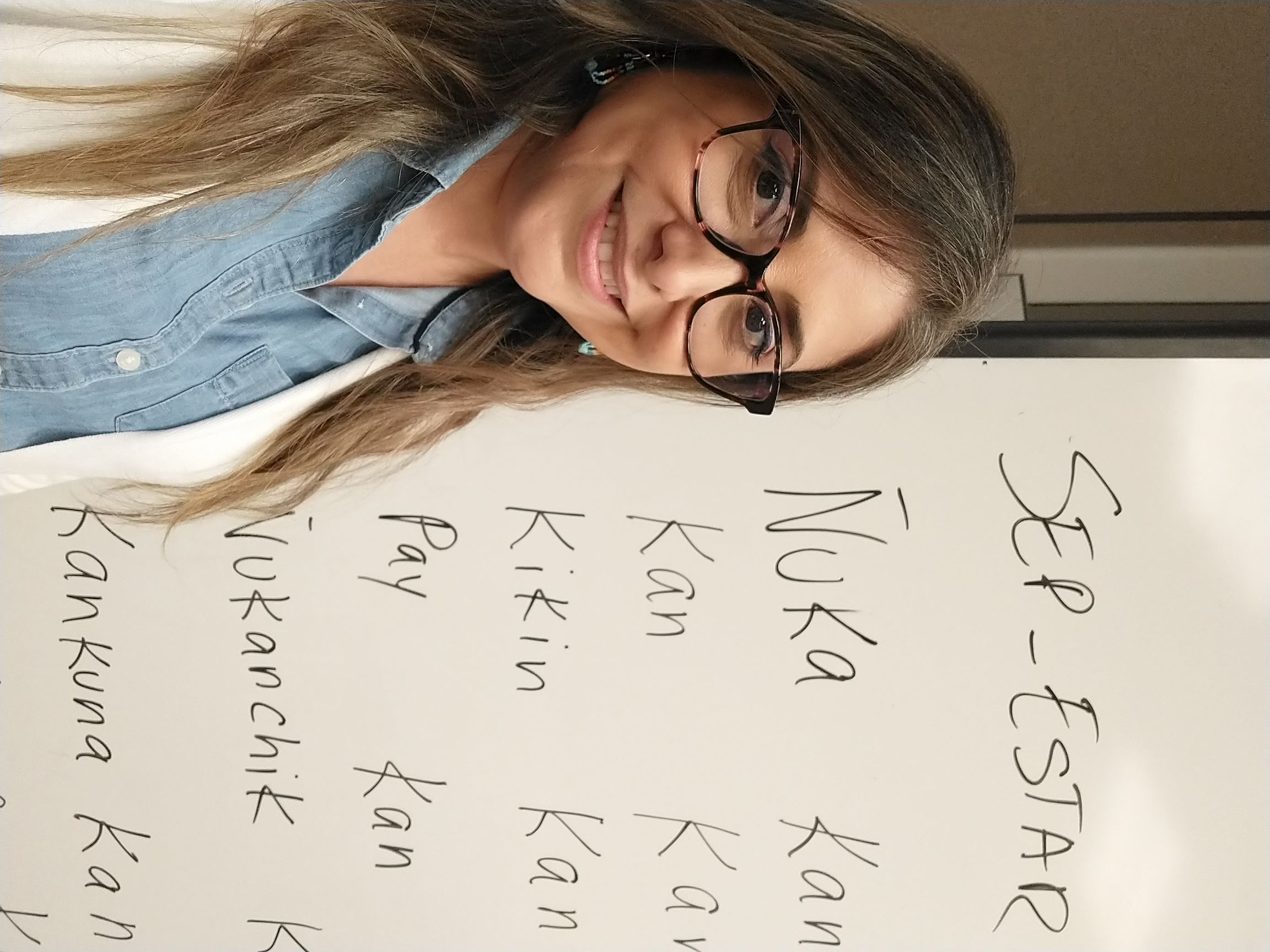
Philosophy of Teaching
As a language instructor, I aspire to create a student-centered learning environment where students will actively participate in their learning. I dedicate time to getting to know my students to learn what motivates them, and by doing so, I can create meaningful lessons that spark their interest. Part of my teaching methodology is derived from the American Council on the Teaching of Foreign Languages (ACTFL) and the World-Readiness Standards for learning languages that “define the central role of world languages in the learning career of every student. The five goals areas of the Standards establish an inextricable link between communication and culture, which is applied in making connections and comparisons and using this competence to be part of local and global communities.” (World-Readiness Standards for Learning Languages ACTFL). Therefore, the lessons and activities that I designed will consider the incorporation of the 5C’s: “Communication,” “Cultures,” “Connections,” “Comparisons,” and “Communities.”
During my career, I have taught undergraduate courses in Spanish 1 and 2 at Texas State University, Texas Lutheran University, and Northwest Vista College. I was able to practice the language pedagogies courses that I took as a graduate student. Training in these three institutions has added exceptional knowledge and experiences, allowing me to constantly evaluate myself and my teaching methodology. We never stop learning, and as language instructors, we should be open-minded and reflect upon what things we can improve for the benefit of our students.
A critical component of my teaching philosophy is getting to know my students and building trusting relationships. Based on this information, I can adapt my teaching methods and content to meet the needs of different students. Making every class relevant and engaging the students is essential because they can relate to the content more efficiently and be more open to learning. Finally, I hope that my lessons spark students’ interest to continue learning Spanish, use what they have learned outside the classroom, and see the world from different perspectives.
Courses Taught
University of Miami
Graduate Teaching Assistant, Department of Modern Languages and Literatures (2021–2025)
- SPA 353: Colonial Spanish American Topics — The Struggle for Representation: Writing Indigenous Peoples during the Spanish-American Colonial Period (Co-taught with Dr. Viviana Díaz Balsera)
- SPA 202: Intermediate Spanish II
- SPA 201: Intermediate Spanish I
- SPA 102: Elementary Spanish II
- SPA 101: Elementary Spanish I
Courses taught in face-to-face formats.
Northwest Vista College
Spanish Adjunct Faculty, World Languages Department (2021–Present)
- SPA 1412: Elementary Spanish II
- SPA 1411: Elementary Spanish I
Courses taught online in synchronous and asynchronous formats.
Texas Lutheran University
Spanish Adjunct Faculty, Department of Communication, Cultures, English, and World Languages (2020–2021)
- SPA 131: Elementary Spanish I
Courses taught online in synchronous formats.
Texas State University
Graduate Teaching Assistant, Department of World Languages and Literatures (2018–2020)
- SPA 1420: Beginning Spanish II
- SPA 1410: Beginning Spanish I
Courses taught in face-to-face and online synchronous formats.