
My research examines Indigenous sovereignty, environmental justice, language revitalization, migration, and decolonial feminist praxis through ethnographic fieldwork, oral history, documentary practice, and digital humanities methodologies in the Ecuadorian Amazon and among Kichwa diasporic communities in the United States.
Indigenous Feminisms — Ñañapura (“Among Sisters”)
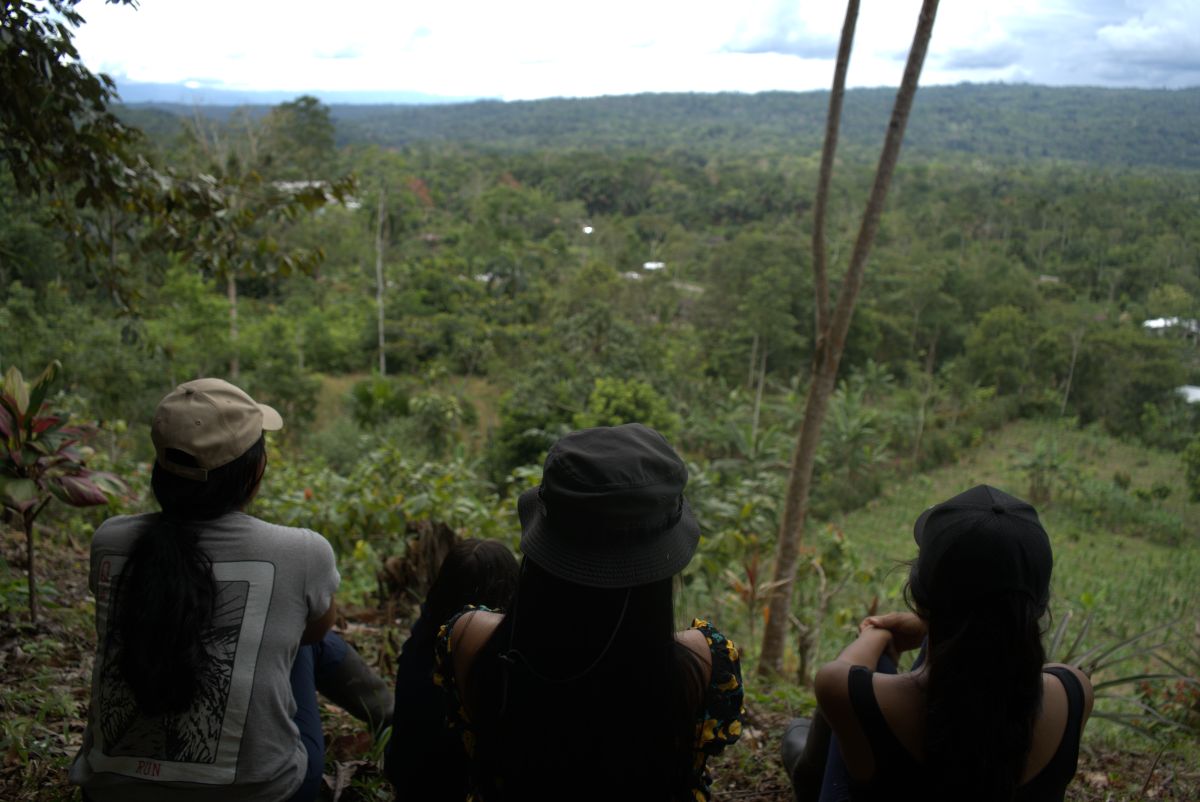
This project examines how Indigenous Kichwa women mobilize collective practices of care, reciprocity, cultural knowledge, and territorial defense in response to extractivism and epistemic erasure in the Ecuadorian Amazon.
Drawing from Indigenous feminisms, environmental humanities, and decolonial theory, the project develops ñañapura—meaning “among sisters” in Kichwa—as a framework for understanding Indigenous feminist praxis grounded in embodied knowledge, collective responsibility, relationality, and environmental stewardship.
Based on ethnographic fieldwork conducted between 2023 and 2025, this research combines oral history, documentary practice, audiovisual media, and collaborative methodologies to examine how Indigenous women sustain cultural memory and generate alternative forms of environmental resistance and knowledge production.
View Documentary and Fieldwork →
Research Areas
- Indigenous Feminisms
- Environmental Justice
- Ethnography
- Oral History
- Documentary Practice
- Decolonial Theory
- Amazonian Studies
Language Revitalization — Kichwa Language and Cultural Immersion Project
This project emerged from intensive Kichwa language study and cultural immersion in the Ecuadorian Amazon through the Foreign Language and Area Studies (FLAS) Fellowship funded by the U.S. Department of Education during the summers of 2023 and 2024.
The project promotes Kichwa language and culture through free and accessible digital resources that support self-guided learning, Indigenous language revitalization, and cultural preservation.
By gathering texts, videos, oral resources, and educational materials in one organized digital space, the project seeks to make Kichwa language learning more accessible while supporting broader efforts toward Indigenous linguistic and cultural continuity.
Research Areas
- Kichwa Language Revitalization
- Digital Humanities
- Public Humanities
- Indigenous Education
- Cultural Preservation
- Language Pedagogy
Indigenous Diaspora and Migration
This project examines Kichwa diasporic communities in the United States, with particular attention to multilingualism, migration, cultural continuity, and intergenerational memory among Indigenous migrants and younger generations.
Drawing from sociolinguistics, migration studies, Indigenous studies, and ethnographic research, this work explores how multilingual practices across English, Spanish, and Kichwa shape identity formation, language maintenance, and community belonging within transnational Indigenous contexts.
The project also investigates how younger Kichwa generations reclaim language, traditions, and ancestral knowledge as forms of cultural continuity and resistance within diasporic and urban environments.
Kichwa Diaspora Community Participation Initiative
As part of this ongoing research, I am developing collaborative and community-based methodologies with members of Kichwa diasporic communities in the United States.
This initiative invites participants to share experiences related to migration, multilingualism, cultural memory, identity formation, and language revitalization among Kichwa communities living outside Ecuador.
Participate in the Kichwa Diaspora Project →
Research Areas
- Sociolinguistics
- Migration Studies
- Indigenous Diaspora
- Language Revitalization
- Ethnography
- Transnational Studies
- Indigenous Mobility
Environmental Justice and Territorial Defense
.jpg)
This area of research examines extractivism, environmental degradation, and Indigenous territorial defense in the Ecuadorian Amazon through digital humanities methodologies, documentary practice, and environmental storytelling.
My work explores how Indigenous communities organize against mining, oil extraction, and ecological destruction while sustaining collective forms of environmental knowledge and territorial sovereignty.
Digital mapping and StoryMap projects expand these collaborations by making environmental conflicts and Indigenous resistance movements accessible to broader public audiences.
Research Areas
- Environmental Humanities
- Extractivism Studies
- Territorial Defense
- Digital Humanities
- StoryMaps and Mapping
- Public Humanities
- Indigenous Sovereignty